A fence is a big investment, and in Southwest Florida it takes a beating. Between the humidity, daily summer storms, intense sun, and hurricane season, even a well-built fence can fade, rot, rust, or lean sooner than you’d expect.
The good news is that fence maintenance in Wimauma, FL doesn’t have to be complicated. A few simple habits, done at the right times of year, can add years to your fence’s life and save you from expensive replacements. This guide walks you through what to check, what to clean, and when to call a professional.
Why Fence Maintenance Matters in Wimauma
Wimauma sits in southern Hillsborough County, where many properties are larger lots with open yards, livestock areas, or garden space. That means fences here often work harder than in a typical subdivision. Local conditions that affect them include:
- High humidity and frequent rain, which encourage mold, mildew, and rot
- Strong summer sun, which fades and dries out wood and vinyl
- Sandy soil, which can shift and loosen fence posts over time
- Tropical storms and hurricane season (June through November), which stress posts, panels, and gates
- Insects like termites, which can quietly damage wood
Regular upkeep catches these problems early, when they’re cheap and easy to fix.
Your Year-Round Fence Maintenance Checklist
You don’t need to spend every weekend on your fence. Most homeowners do well with a quick seasonal routine.
Spring: Inspect and Clean
After winter, take a slow walk along the whole fence line and look for:
- Loose, leaning, or wobbly posts
- Cracked, split, or warped boards and panels
- Rust on hinges, screws, and metal rails
- Sagging or misaligned gates
- Damp spots, mold, or green buildup
Fix small issues now, before summer storms make them worse.
Early Summer: Prepare for Storm Season
Before hurricane season starts, do a “storm-ready” check:
- Tighten loose screws and replace damaged hardware
- Make sure gate latches and hinges are secure
- Trim tree limbs hanging over the fence
- Clear debris, vines, and anything leaning against it
- Replace any rotted boards that could become flying debris
Fall: Repair and Protect
Once the worst of storm season passes, assess any damage and schedule repairs. Fall is also a good time to reseal or repaint wood while the weather is a bit drier.
Winter: Light Upkeep
Winter in Florida is mild, so it’s a good window for cleaning, touch-ups, and planning bigger projects.
Maintenance Tips by Fence Type
Different materials need different care. Here’s what to focus on.
Wood Fences
Wood is popular for its look, but it needs the most attention in Florida’s humidity.
- Clean once or twice a year with a soft brush and mild soap and water. If you use a pressure washer, keep the pressure low and stay a safe distance from the wood to avoid damaging the grain.
- Seal or stain every 2 to 3 years, or when water stops beading on the surface.
- Replace rotted boards promptly. Rot spreads.
- Check for termites, especially near the ground. Look for mud tubes, hollow-sounding wood, or fine sawdust.
- Keep soil, mulch, and plants off the bottom boards so the wood can dry out.
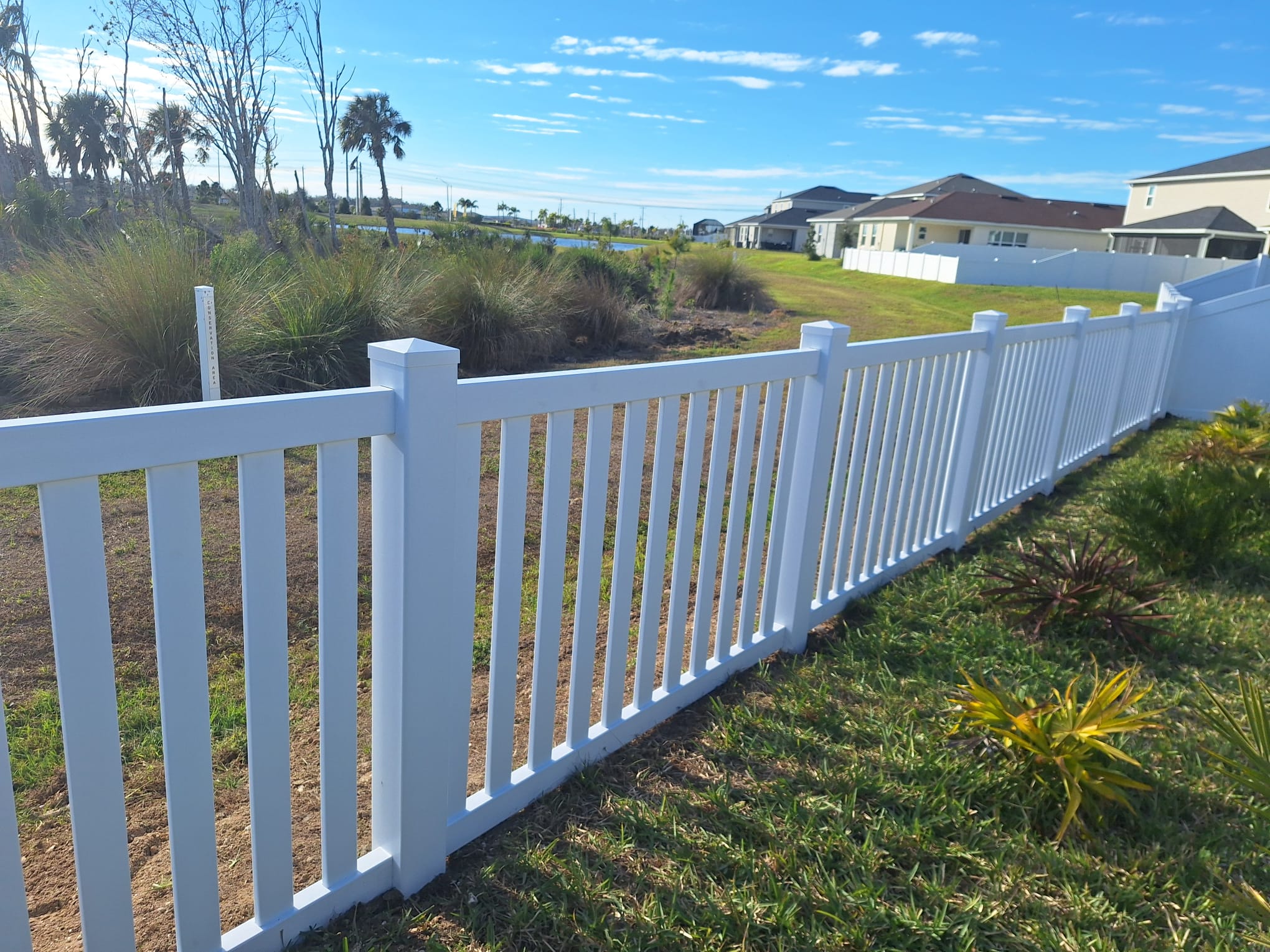
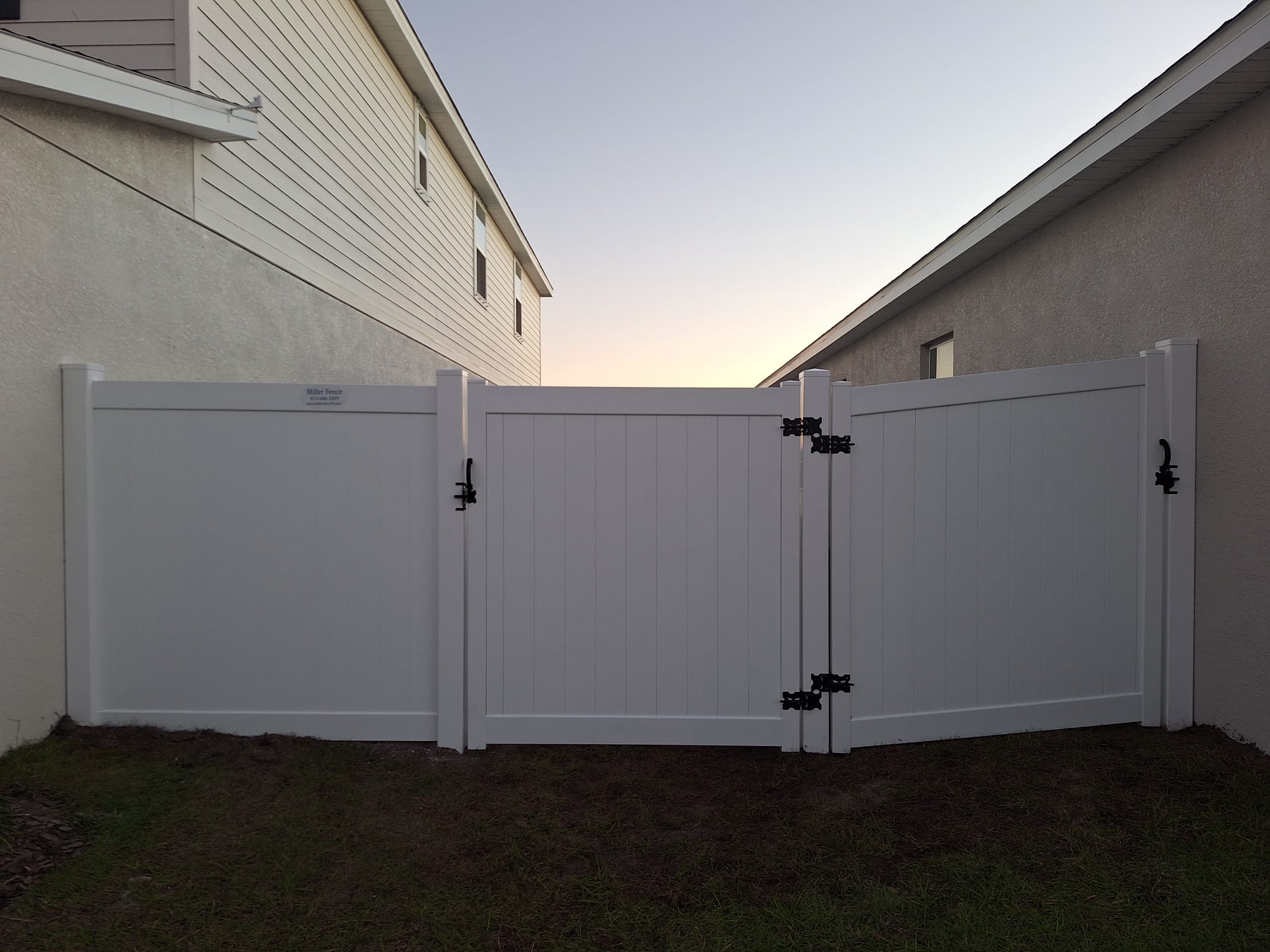
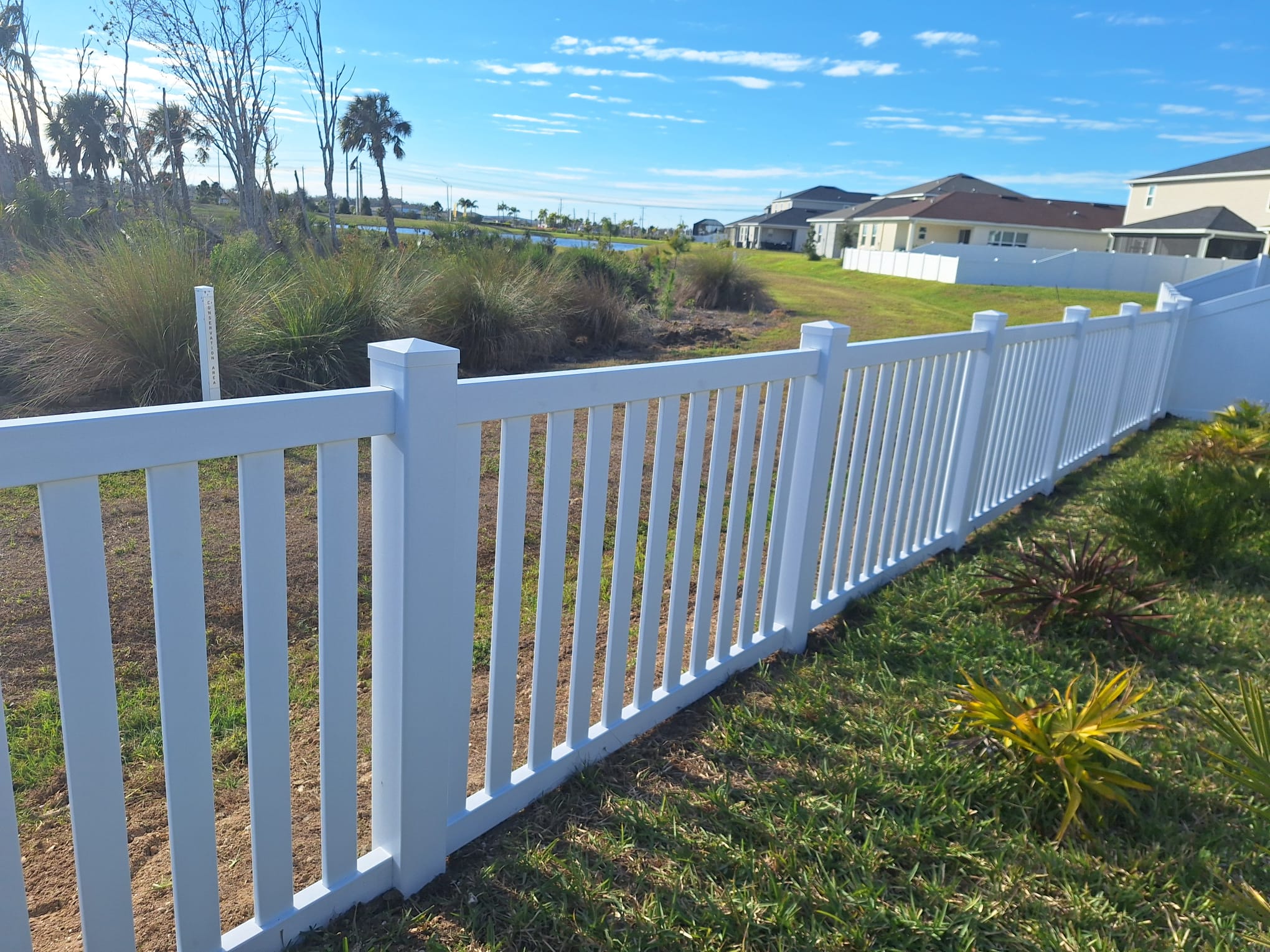
Vinyl Fences
Vinyl is low-maintenance, but it’s not maintenance-free.
- Rinse with a garden hose and wash with mild soap to remove dirt and mildew.
- Avoid harsh chemicals and abrasive scrubbers that can scratch the surface.
- Look for cracks, especially after storms or impacts.
- Make sure posts remain firmly set and panels stay snug.
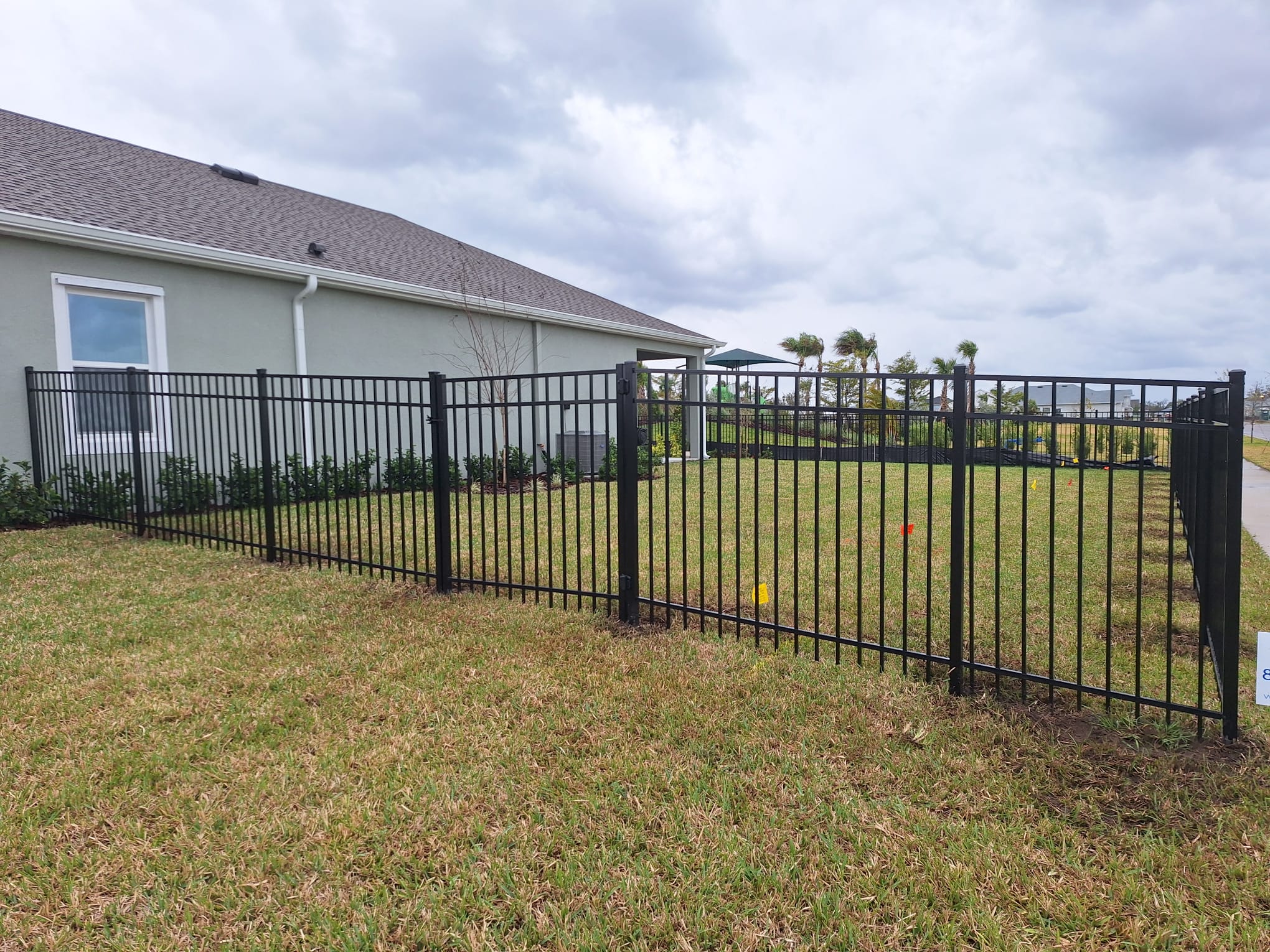
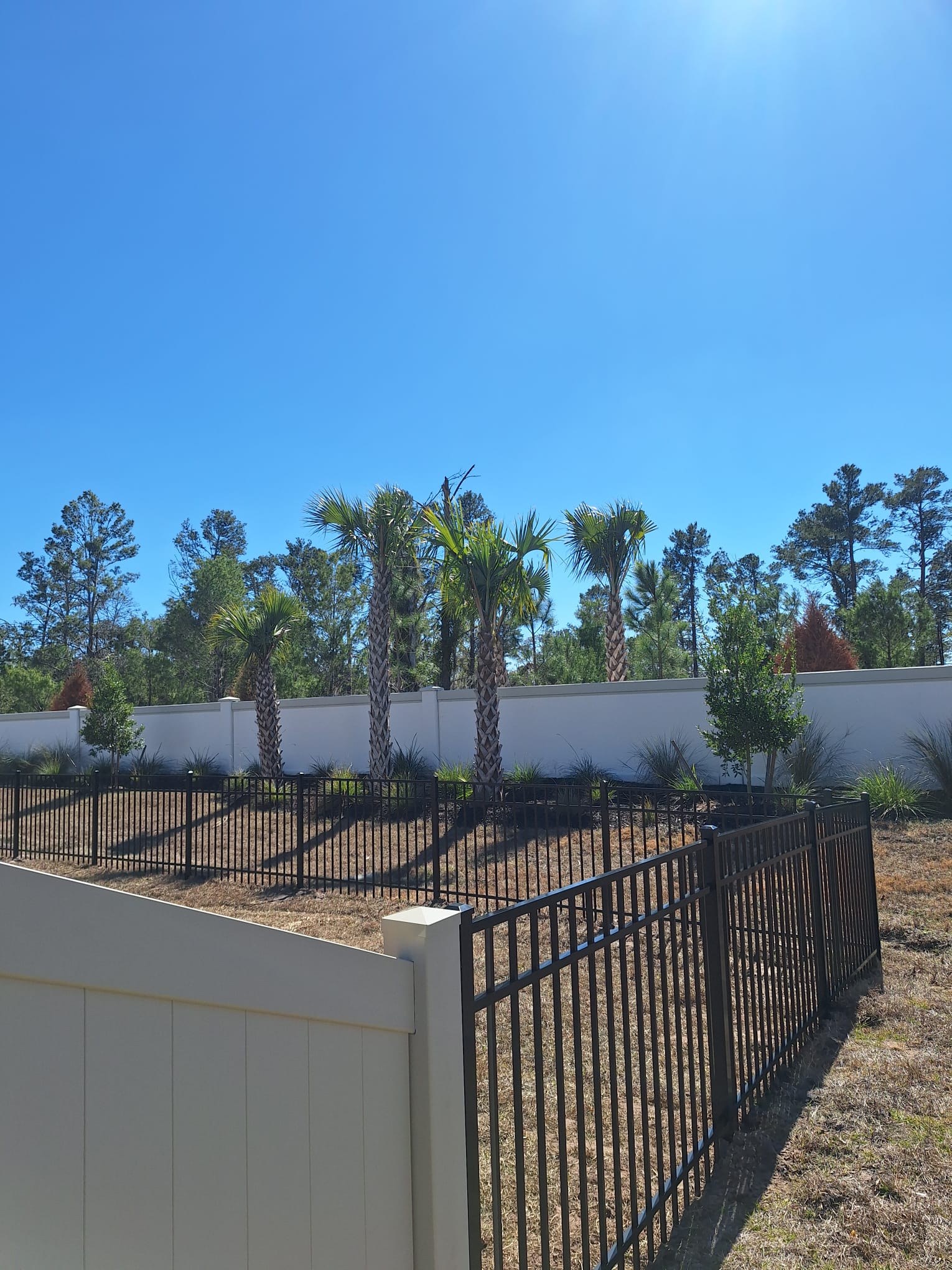
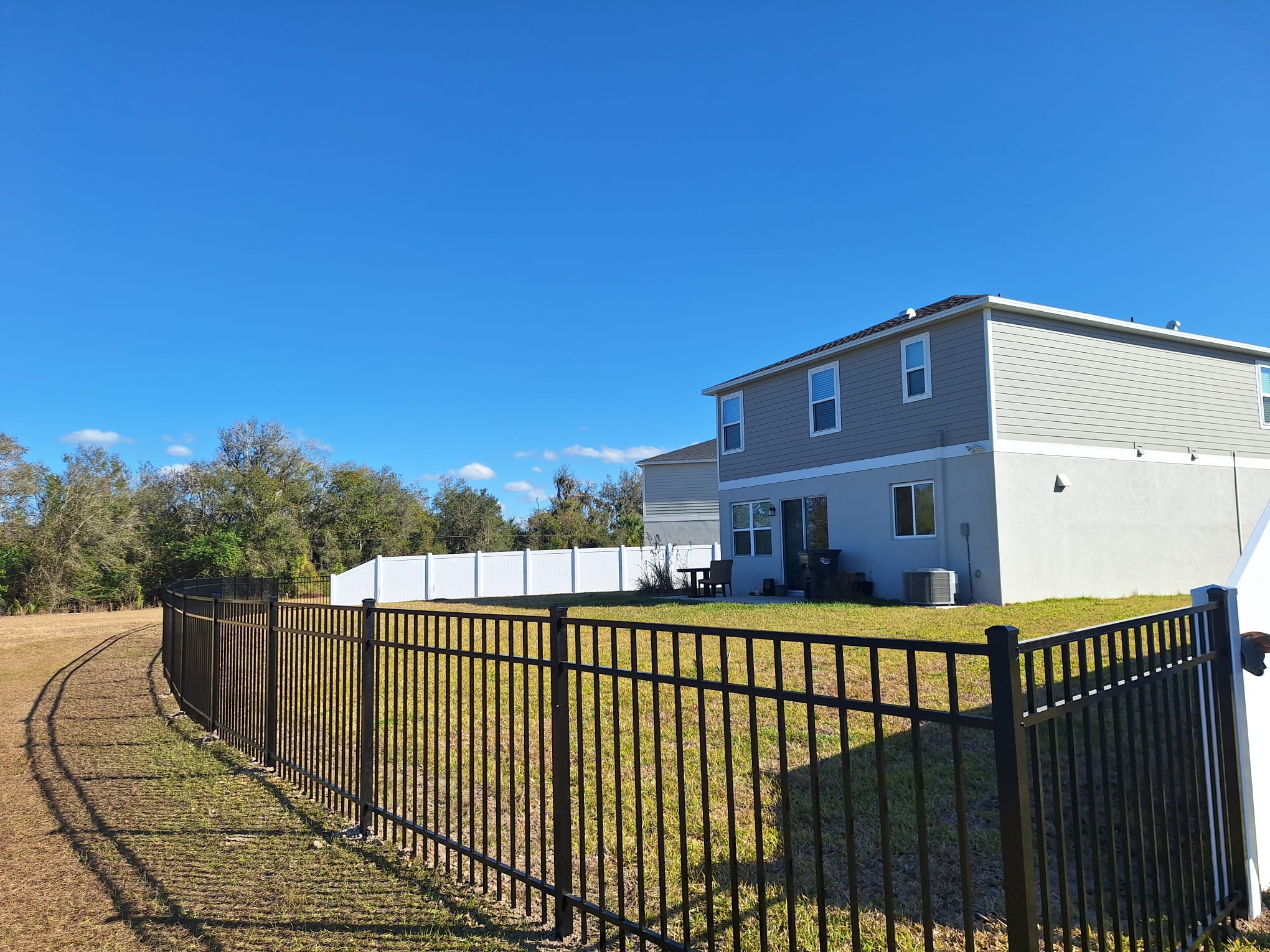
Aluminum and Metal Fences
Aluminum resists rust well, but steel and chain-link fences need more care.
- Wipe down with soapy water to remove salt, dirt, and grime.
- Touch up chips or scratches with matching paint to prevent corrosion.
- Check welds, brackets, and hardware for rust.
- Lubricate gate hinges and latches once or twice a year.
Chain-Link Fences
- Look for rust, bent sections, and loose ties.
- Cut back vines that can pull the fence down over time.
- Re-tension sagging sections and replace damaged posts.
Common Fence Problems (and How to Handle Them)
Leaning or Loose Posts
Sandy soil and heavy rain can loosen post footings. A slightly loose post may be reset with fresh concrete. If a post is rotted at the base, it usually needs to be replaced, since patching won’t hold up.
Mold, Mildew, and Algae
Green or black spots are common in Florida’s humidity. A gentle cleaning with soap and water usually works. Wear gloves and eye protection, and avoid mixing cleaning chemicals.
Rot and Termite Damage
Soft, crumbly, or hollow wood is a warning sign. Replace damaged sections and consider contacting a pest control professional if you suspect termites.
Sagging or Sticking Gates
Gates carry the most stress. Tightening hinges, adjusting the latch, or adding a support brace often fixes the problem. If the gate frame is warped, replacement may be a better value.
Sprinkler Damage
Irrigation that sprays your fence constantly causes staining, rot, and rust. Adjust sprinkler heads so they water the lawn, not the fence.
Simple Habits That Extend Your Fence’s Life
- Keep vegetation trimmed back from the fence
- Fix small problems quickly, before they spread
- Avoid piling heavy objects against the fence
- Redirect water runoff away from posts
- Inspect after every major storm
When to Repair and When to Replace
Repairs make sense for isolated damage, such as a few boards, a loose gate, or one leaning post. Replacement may be the smarter choice when:
- More than roughly a quarter to a third of the fence is damaged
- Posts are rotted or unstable along multiple sections
- Repair costs keep adding up year after year
- The fence no longer meets your needs for privacy, safety, or containing pets or livestock
A local fence professional can inspect the fence and give you an honest recommendation. If you’re in an HOA, check your community’s rules before changing the style, color, or height.
FAQ: Fence Maintenance in Wimauma, FL
Do a quick inspection each season and a deeper cleaning once or twice a year. Check again after any major storm. Wood fences also need resealing or staining every 2 to 3 years.
Vinyl and aluminum generally need the least upkeep. Vinyl needs occasional washing, and aluminum resists rust well. Wood looks great but requires regular sealing and termite checks.
Cleaning, tightening hardware, and replacing a few boards are manageable DIY jobs. Hire a professional for leaning posts, widespread rot, storm damage, or gate frame problems, where a poor repair can fail quickly.