Florida’s subtropical climate presents unique challenges for homeowners considering wood fencing. The combination of high humidity, intense heat, salt air, and frequent rainfall creates an environment that tests the resilience of wood fencing materials. Understanding wood fence durability in Florida humidity is essential for making informed decisions about your residential property investment. Unlike homeowners in drier climates, Florida residents must contend with moisture-related issues that can significantly impact fence longevity. With proper knowledge and maintenance strategies, however, you can ensure your wooden fence remains beautiful and structurally sound for years to come. Whether you’re looking for a tampa fl wood fence installation or seeking to protect an existing fence, understanding humidity’s impact is crucial.
The Impact of Florida’s Humidity on Wood Fences
Florida’s humidity levels are among the highest in the United States, with average humidity consistently exceeding 70 percent, particularly during summer months. This persistent moisture creates an ideal breeding ground for wood-damaging organisms and accelerates wood degradation processes.
Wood naturally absorbs and releases moisture based on environmental conditions. In humid climates like Florida, wood remains constantly saturated, preventing it from ever fully drying. This extended moisture exposure leads to several problems: wood swelling and warping, fungal growth, rot development, and increased susceptibility to pest infestations. The moisture cycle weakens the structural integrity of fence boards and compromises fasteners, potentially leading to fence failure.
Common Wood-Damaging Issues in Florida
Rot and Decay
Wood rot is perhaps the most significant threat to Florida wood fences. Dry rot and wet rot fungi thrive in moist environments and feed on wood cellulose. Once rot begins, it spreads rapidly, creating soft, weakened areas in fence boards. Rot typically begins at ground level where fence posts contact soil moisture, then spreads upward throughout the fence structure.
Mold and Mildew
The high humidity fosters the growth of mold and mildew on fence surfaces. While primarily an aesthetic issue initially, persistent mold growth traps moisture against the wood, accelerating decay and significantly shortening fence lifespan. Black or green staining indicates mold presence and signals increasing structural vulnerability.
Warping and Cupping
Constant moisture causes wood boards to swell unevenly, creating warping and cupping (where board edges curl upward). This distortion weakens connections between boards and rails, compromises structural integrity, and creates gaps that allow pests to access the fence interior.
Insect Infestations
Florida’s warm, humid climate attracts termites, carpenter ants, and wood-boring beetles. These insects thrive in moist wood environments, creating galleries and tunnels that hollow out fence components from the inside, often undetected until significant damage occurs.
Wood Species Selection for Florida Climate
Choosing the right wood species is crucial for durability in Florida’s humidity. Some woods naturally resist moisture and pest damage better than others.
Pressure-Treated Pine and Fir
Pressure-treated lumber remains the most popular choice for Florida fencing due to affordability and chemical protection against rot and insects. Modern pressure-treated wood uses copper-based preservatives that provide 15-20 years of protection. However, pressure treatment degrades over time, particularly in Florida’s intense sun and high humidity.
Cedar and Redwood
These softwoods contain natural oils that provide some decay resistance. However, even cedar requires protective finishes to withstand Florida’s humidity effectively. Cedar’s natural oils gradually deplete through weathering, reducing its protective properties over time.
Tropical Hardwoods
Woods like ipe and cumaru offer exceptional durability due to their natural density and decay resistance. These hardwoods naturally resist rot, insects, and weathering without chemical treatment. While significantly more expensive than pressure-treated lumber, their longevity often justifies the investment.
Protective Strategies for Maximum Durability
Quality Staining and Sealing
Applying quality exterior wood stain and sealant is the most critical maintenance step for Florida wood fences. These products penetrate wood pores, blocking moisture while allowing wood to breathe. Stain also reflects UV rays, reducing sun damage and color fading. High-quality stains need reapplication every 2-3 years in Florida’s harsh climate.
Proper Installation Techniques
Professional installation significantly impacts fence durability. Proper post installation includes concrete footings that extend below the water table, preventing moisture from wicking up into posts. Posts should never rest directly in soil or contact standing water. Installing drip caps on fence posts directs water away from end grain, a particularly vulnerable area for moisture absorption.
Adequate Drainage
Ensuring proper site drainage protects your fence from standing water. Grade the soil away from fence lines, install French drains if necessary, and avoid planting landscaping that blocks air circulation around fence bases. Good air movement allows wood to dry faster after rain, reducing moisture-related damage.
Regular Maintenance Routine
Establish a consistent maintenance schedule including:
- Annual inspection for rot, mold, or insect damage
- Prompt removal of mold and mildew with appropriate cleaners
- Reapplication of stain or sealant every 2-3 years
- Replacement of damaged boards before decay spreads
- Trimming vegetation that grows against fence lines
Paint vs. Stain: Which Offers Better Protection?
Paint and stain each offer different advantages for Florida wood fences. Paint provides a more opaque protective layer that completely blocks UV rays and moisture. However, paint eventually peels and requires more intensive maintenance for reapplication. Stain penetrates wood, allowing it to breathe while providing color and UV protection. Stain generally requires less intense surface preparation during reapplication.
For Florida’s climate, semi-transparent stains often provide the optimal balance, offering good moisture protection while showcasing wood grain and allowing easier maintenance cycles.
The Role of Quality Installation
Professional installation fundamentally impacts wood fence durability in humid climates. Experienced installers understand Florida-specific requirements, including proper post depth installation below the frost line, use of corrosion-resistant fasteners, adequate spacing for air circulation, and selection of appropriate wood species for local conditions. They also ensure proper slope and drainage considerations critical for humid climates.
Comparing Wood to Alternative Materials
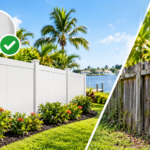
For homeowners concerned about humidity’s impact, composite and vinyl alternatives offer maintenance-free options. Composite materials resist moisture, rot, and insects while requiring only occasional cleaning. Vinyl requires virtually no maintenance and eliminates humidity-related concerns entirely. While more expensive upfront, these alternatives often cost less over 20+ years when maintenance expenses are factored in.
A: With proper installation and maintenance, quality wood fences last 15-20 years in Florida’s humid climate. Tropical hardwoods may exceed 25 years, while untreated or poorly maintained fences may deteriorate within 5-10 years. Regular staining, sealing, and prompt repair of damage significantly extend lifespan.
A: Semi-transparent exterior wood stains with UV protection and water repellency work best for Florida. Look for products specifically formulated for humid climates that contain mildewcides to prevent mold growth. Acrylic latex stains are generally easier to maintain than oil-based options in Florida’s climate.
A: Pressure-treated wood is a viable, affordable option for Florida fencing if properly maintained. However, its chemical protection degrades over time in Florida’s harsh climate. Many homeowners prefer cedar or tropical hardwoods for better long-term durability, though they cost more initially. The choice depends on your budget and maintenance commitment.